
- Carry-on, don’t carry on
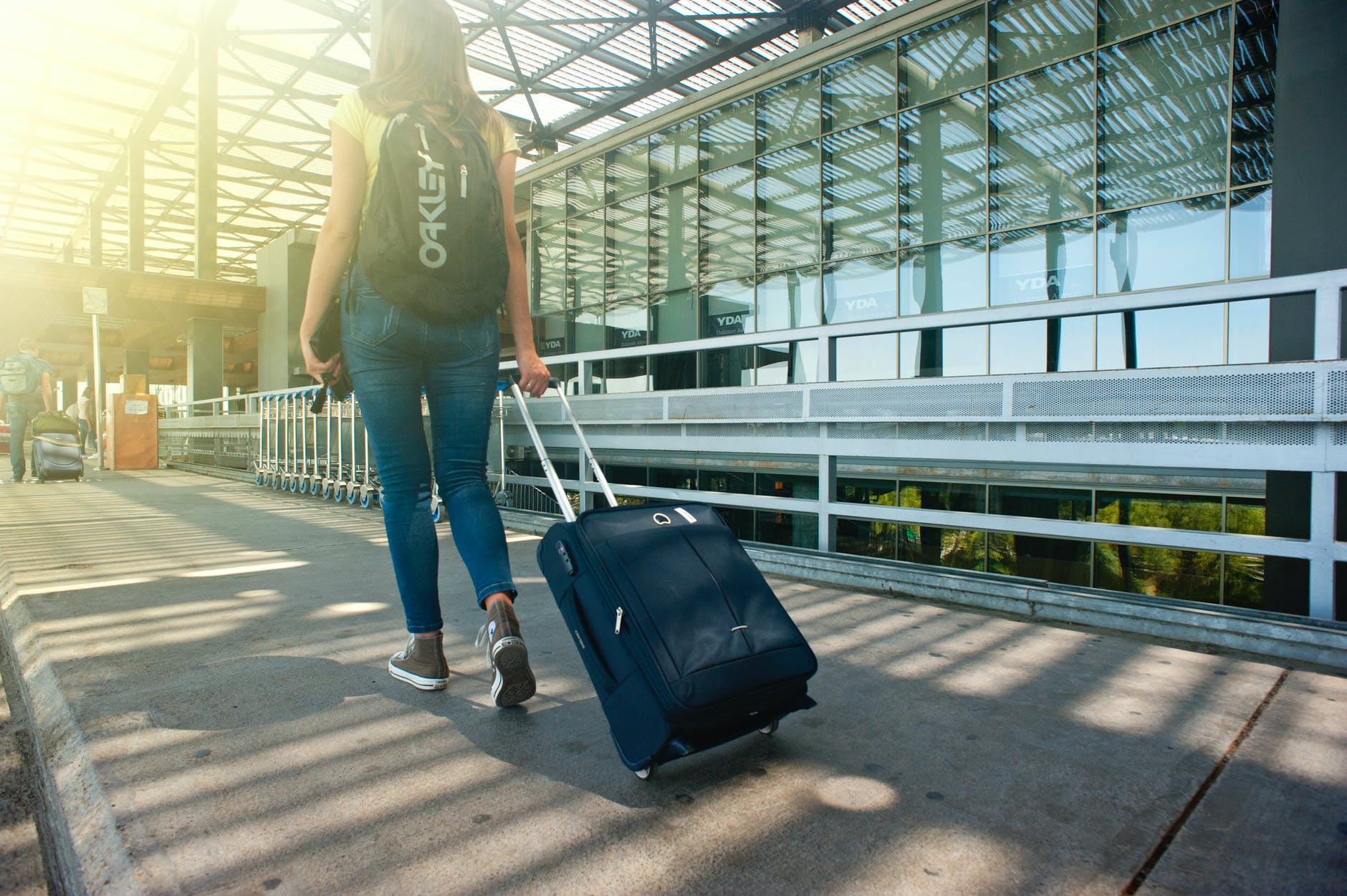
Try to get away with carry-on luggage only! You will save time on arrive, have less to worry about (lost or damaged luggage) and also have a feeling of smugness as you swiftly stroll past the luggage carousel, beating the rush to the taxi stand. Let go of the panic associated with not having enough ‘stuff’ and remember shampoo comes in ‘travel-size’ for a reason. Get creative with your outfits and reap the rewards – and remember if you do forget something necessary, you can usually buy it when you get there. - Wear comfy clothes (and your heaviest shoes)
I have a tried and tested airport outfit that I wear every time I travel: tights, joggers, a cotton singlet, a loose long sleeved shirt, and a cardigan. I may not be the most stylish on the aircraft (I don’t know how the perfectly manicured middle-aged women wear their heels and cute dresses) but I am definitely the comfiest and the layers allow for changes in temperature – it is always cold on planes! Also, by wearing your joggers and cardigan, you save room in your carry-on bag or half a kilo in your checked baggage. - Organise your bag for maximum efficiency
This will ensure your time at the airport and going through security is as smooth as possible. Have shoes on the bottom, the clothes you’re not planning on wearing until you get there on top of those, followed by your pyjamas and toothbrush (for when you get there – your tired self will thank you), then your essentials at the top (book, snacks, earphones etc.) with your snap lock bag containing liquids and gels on top of these so you can quickly whip them out when you’re going through the security screening. - Have copies of your travel document
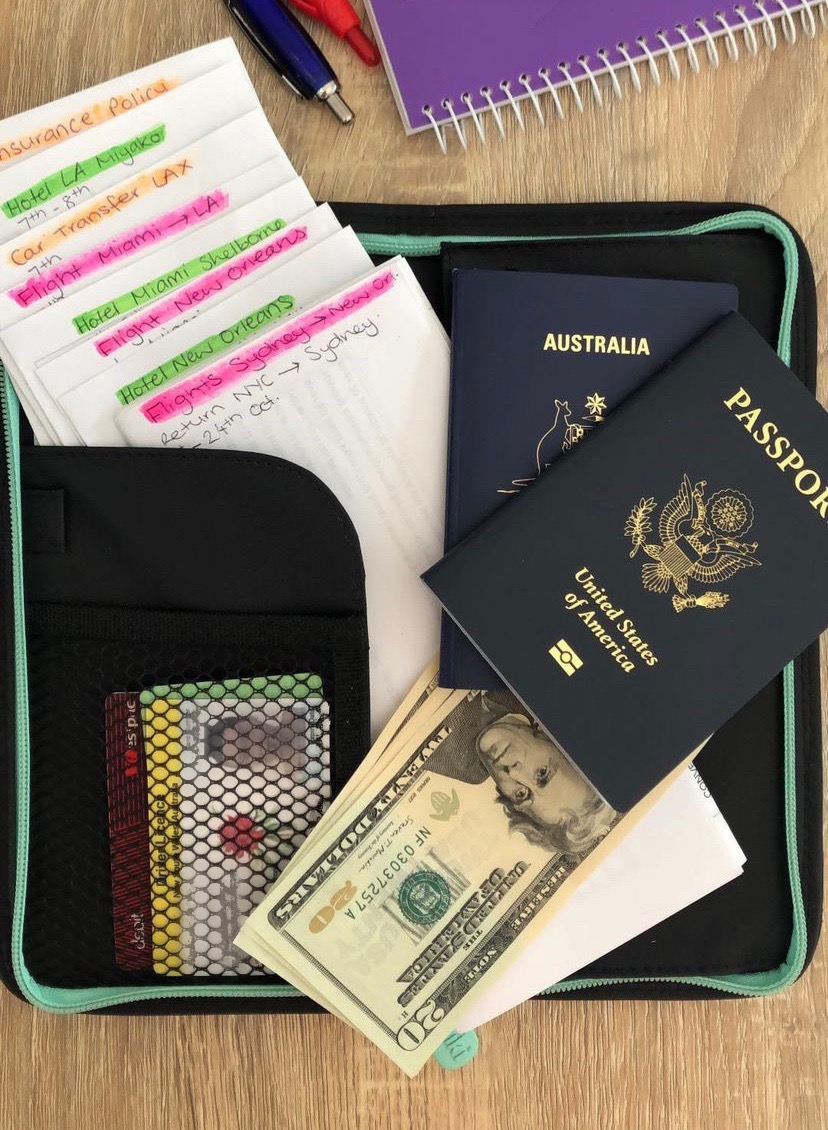
There’s nothing worse than arriving at your destination and forgetting the name of your hotel (trust me, I’ve been there!) with no Wi-Fi to check your confirmation email. Print out all of your travel documents – flight, hotel, transfer confirmations, travel insurance policy etc. and fold them so they fit in your travel wallet/passport holder. Then, label them so you don’t have to unfold them to check which is which and arrange them in order of need. If you feel it necessary, go one step further and print off an extra copy to stash in your luggage in case of a worst case scenario. Take a photocopy of your passport and license and stash them in your luggage as well, just in case. If you’re going to an Asia country or somewhere where they don’t share the same alphabet, it could be a good idea to put the address of your hotel into google translate and take a screen shot in case your taxi driver doesn’t recognise the name of your hotel or English address. - Bring your own water bottle
It’s important to keep hydrated on long haul flights (to keep your skin from getting super dry in the cabin air and to also reduce jet lag) and it can get annoying to constantly have to ask the flight attendant for another tiny bottle of water. Bring an empty plastic water bottle through security then fill it up before boarding the plane. Same goes for when you arrive at your destination – most airports have free filtered water and some hotels in countries where tap water is not suitable for consumption have elected for a more environmentally friendly method of offering filtered water coolers. I also hate paying $4.50 for a bottle of water at the airport! Not to mention if you’re parched on a layover with no local currency… - Decide how you’re going to organise your money
Many people wonder what the best way to change their money into the local currency is. Some go for taking all cash and exchanging it there (to avoid the poor exchange rate at the airport and hefty ATM fees in foreign countries) and some exchange it in their home country (for convenience and not having to worry about dodgy exchange places). Both of these options are fine, but I worry about carrying so much cash in case it gets lost or stolen. Others opt for a travel card which offer good exchange rates and no ATM fees; however, you do need to some degree of organisation in pre-loading an amount on to it (and Wi-Fi for topping it up). If this is your preferred option, check with your bank as they might offer you a good deal. In my opinion, it depends on your destination (whether there are readily-available ATMs, the safety of carrying large amounts of cash, the compatibility of some credit cards – I once had my card eaten by an ATM in Italy – and whether most places at your destination prefer cash or card). What I usually do is withdraw half of my budgeted spending allowance and keep most of it in Australian dollars stashed in various places in my suitcase and travel wallet. I then exchange $100-200 (I ring around and check the exchange rate and ask places to ‘price-match’) so that I have some local currency for when I arrive. This is handy in case I need to buy something or for an emergency taxi in case my transfer doesn’t show up. I then exchange my Australian dollars at a reputable place when I get there. When I run out of cash, I check whether it’s cheaper (fee and exchange rate wise) to use my credit card for some purchases or get money out of an ATM. Do your research and find what suits you for the country you’re travelling to. - Be nice to staff
Whether you believe in karma, remember a time when you were treated rudely at work, or have clued in that being a decent person has it’s perks, it pays to be courteous. Remember that things will occasionally go wrong and that airport and hotel staff are only trying to do their job. If an inconvenience occurs, like a delayed flight or a mix-up, while it is stressful, it’s important to keep your cool in order to get things fixed up ASAP. I try to always be polite and as a result, have been excused for overweight carry-on bags, upgraded, and have had fees waived. It costs nothing to smile and you might make someone’s day! - Download offline maps
Google Maps’ offline maps feature is one of my must-haves when travelling. Download the areas that you will need before you set off and enjoy data-free use of satellite navigation for when you’re exploring. They offer peace of mind and have gotten me out of many sticky situations when I’ve been lost and had no Wi-Fi. - Don’t skimp on travel insurance
You don’t want to be worrying about what-ifs while you’re enjoying your highly anticipated holiday. If you do find yourself in a hospital needing medical care without insurance, you will wish you had thought twice about opting out in order to have more money for beer. If you’re on a tight budget look at the price of the policy when you select the non-comprehensive option – this can reduce the premium. Perhaps you think that $20,000 is enough medical cover and you will at least have some peace of mind. - Do your research
This may sound like a no-brainer but you will have a much better time if you research your holiday destination and know what to expect. Understanding the logistical side is crucial, like how you’re going to get from A to B, visa requirements, VPN for keeping in touch with family members (some countries block certain social media sites), languages spoken & basic phrases, travel adaptors, cultural faux pas’ (you don’t want to get arrested for kissing on a beach like Samantha in Sex and The City!) etc. I once had a friend travel 20 hours by bus only to be denied entry at the Mexican border because she didn’t have the necessary visa. It is also important to research where you want to go and what you want to do before you go, so that you can organise your time efficiently and also have an idea of the most cost effective way to do things.
google138ebecae8db1f91.htmlgoogle-site-verification: google138ebecae8db1f91.html
 The Epicure Collective
Leave a comment